

✒️Intellectual Traditions
This note will examine the objectives and impacts of the following intellectual traditions:
- African Caribbean thought: Pan Africanism; negritude; Rastafari;
- Economic and political thought: industrialization by invitation; Marxism; dependency theory;
- Caribbean feminist thought and theories of gender;
- Indo-Caribbean thought;
- Indigenous perspectives.
First, examine the factors or the environment that facilitated the rise of these intellectual traditions.
The Environment
- injustices stemming from slavery.
- the ensuing racial and social inequality that arose from post-emancipation colonial structures.
- persistent Caribbean underdevelopment.
Afro-Caribbean Thought
Afro-Caribbean philosophy represents an interdisciplinary space, where a variety of approaches to thinking are practiced, examined and critiqued. This philosopy challenged Western European epistemology 1Epistemology is essentially the philosophy of knowledge. It delves into fundamental questions about what knowledge is, how we acquire it, and the limitations of what we can know. Epistemologists wrestle with questions like: What differentiates true belief from knowledge?, How can we justify our beliefs? Are there certain ways of knowing that are more reliable than others?This field has been a central topic in philosophy since the time of the ancient Greeks, and it continues to be actively debated today. Some of the big thinkers in epistemology include Plato, René Descartes, and John Locke. Their ideas have had a profound impact on our understanding of the world and ourselves. and ontology. The result is a fresh ground for exchange of ideas that welcomes innovation and discards Western disciplinary philosophical thought as a fundamental requirement to pursuing questions and theoretical ideas about Africans in the Americas.
Gertrude James González de Allen
PAN-AFRICANISM
Overview of Pan-Africanism
- Pan-Africanism is an intellectual and political movement that promotes the unity, liberation, and advancement of African people worldwide.
- It encourages solidarity among people of African descent and emphasizes resistance to colonialism, racism, and oppression.
Main Thinkers
- Marcus Garvey
- George Padmore
- Kwame Nkrumah
- W.E.B. Dubois
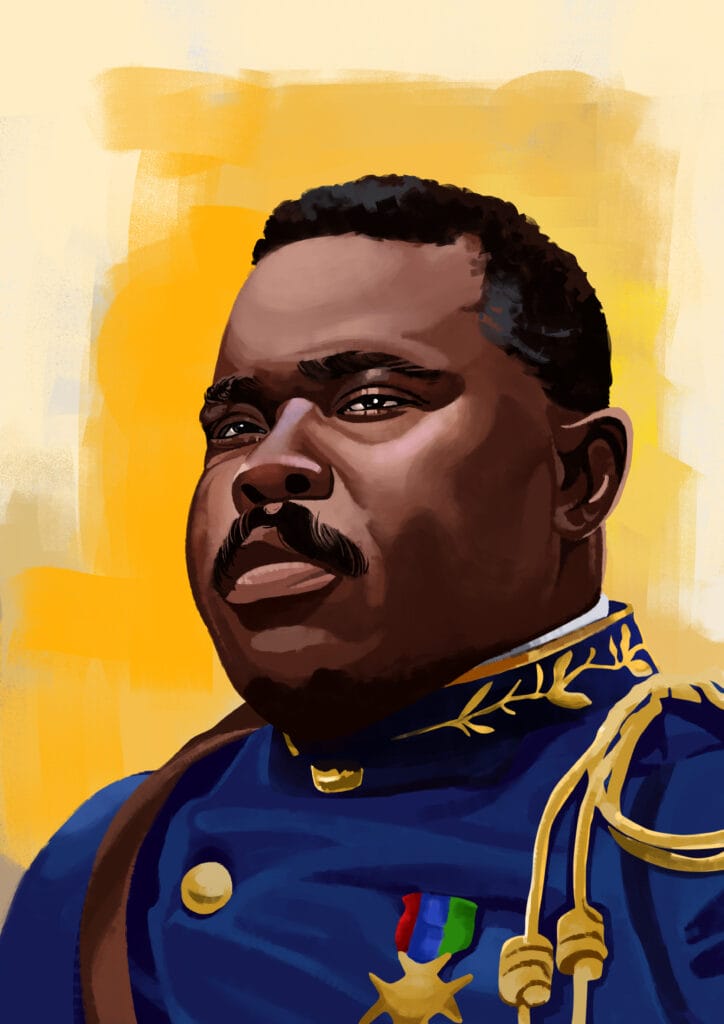
MARCUS MOSIAH GARVEY
1887-1940
Marcus Garvey born on August 17, 1887, in St. Ann’s Bay, Jamaica, was a prominent figure in the Black Nationalist and Pan-African movements. He founded the UNIA 2Universal Negro Improvement Association and African Communities League, which aimed to promote African pride and unity, and economic independence. Garvey’s work was driven by his belief in racial separatism and the “back to Africa” movement, which sought to establish a homeland for African Americans in Africa.
In 1919, Garvey established the Black Star Line, a shipping company to facilitate trade and commerce between Africans in America, the Caribbean, and Africa. He also created the Negro Factories Association to manufacture marketable commodities in major industrial centers. Despite facing numerous challenges, including legal troubles and opposition from other Black leaders, Garvey’s influence on Black nationalism and Pan-Africanism remains significant.
The objectives and impact of Pan-Africanism have evolved, reflecting the changing socio-political landscapes and the needs of African peoples. Below are some of the key objectives and their impact.
Objectives of Pan-Africanism
- To unite people of African descent globally 3One of the core objectives of Pan-Africanism is to promote unity and solidarity among African nations and peoples of African descent worldwide. The movement aims to foster a sense of shared identity and purpose, transcending geographic and cultural boundaries. Pan-Africanists believed that despite differences in nationality, language, and culture, people of African descent share a common history of oppression and should therefore share a common interest in achieving political, economic, and social advancement.
This idea is reflected in the words of Marcus Garvey, who declared, “Africa for the Africans, at home and abroad.” Garvey believed that people of African descent, whether living in Africa or the diaspora, should regard Africa as their ancestral homeland, support its development, and affirm the right of African people to control their own political, economic, and social affairs. Similarly, Kwame Nkrumah captured the spirit of Pan-African identity when he stated, “I am not African because I was born in Africa but because Africa was born in me.” His words emphasize that African identity is not merely a matter of geography, but also of heritage, consciousness, and a shared commitment to the advancement of African peoples worldwide..
- To end colonial rule and racial discrimination across Africa and its diaspora 4Pan-Africanism has historically emphasized the importance of African nations achieving self-determination and independence from colonial rule. The movement supported the struggle for liberation and sovereignty across the African continent..
- To promote Black economic independence 5Economic empowerment and cooperation among African countries have been significant goals. The movement seeks to encourage economic strategies that are conducive to the continent’s development, leveraging shared resources and knowledge to achieve sustainable growth.
- To encourage pride in African history and culture 6Pan-Africanism advocates for the preservation of African cultures and the promotion of cultural exchange among African peoples. It recognizes the rich diversity of African traditions and seeks to protect them from erasure or dilution.
- To support African political liberation movements 7Pan-Africanism has been instrumental in mobilizing people of African descent globally towards political activism, advocating for rights, and challenging injustices including racism, discrimination, and inequality.
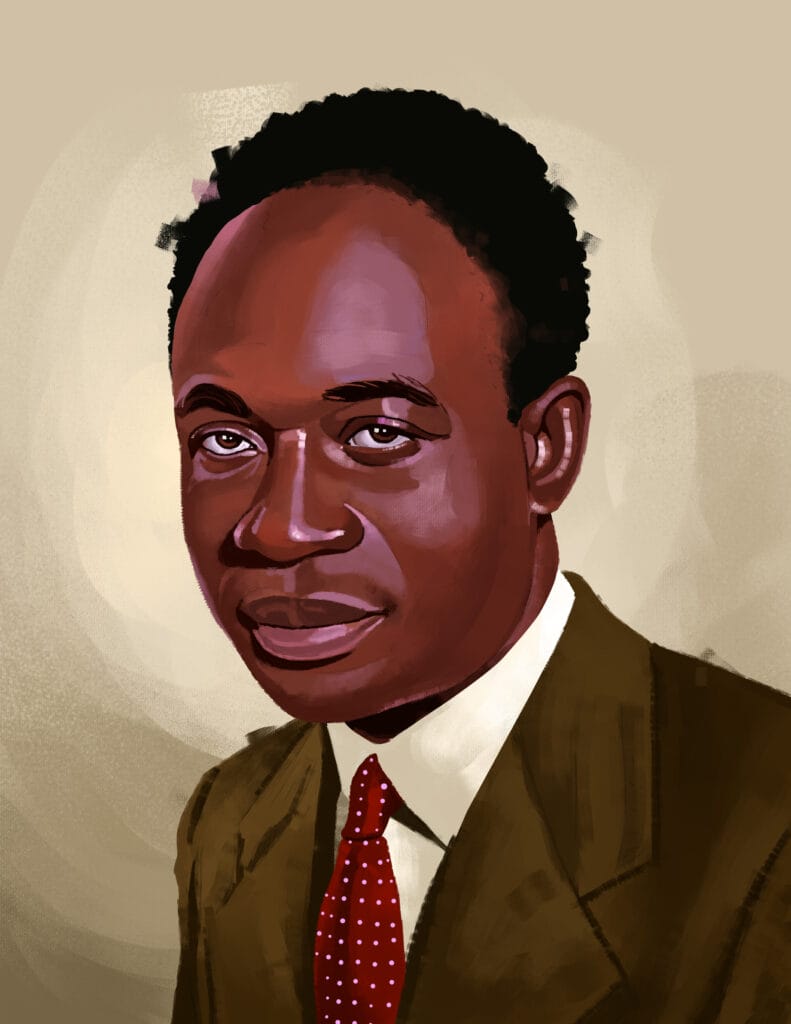
KWAME NKRUMAH
1909-1972
Kwame Nkrumah 8born on September 21, 1909, in Nkroful, Gold Coast (now Ghana) was a pioneering figure in the African independence movement and the first prime minister9(1957-1960) and president10(1960-1966) of the Republic of Ghana. He played a pivotal role in leading the Gold Coast’s drive for independence from Britain and was instrumental in the emergence of Ghana as a new nation in 1957.
Nkrumah’s political philosophy was a blend of socialism and Pan-Africanism. He was deeply influenced by the literature of Karl Marx, Vladimir Lenin, and Marcus Garvey, which shaped his vision for Ghana and Africa as a whole. Nkrumah advocated for African unity and was a leading proponent of the United States of Africa, and co-founded the Organization for African Unity.
Under his leadership, Ghana experienced developments in education, healthcare, and infrastructure. However, his government faced challenges. Nkrumah’s increasing authoritarianism and his government’s financial mismanagement led to a coup d’état in 1966 while he was on a peace mission in Vietnam. He spent the rest of his life in exile, first in Guinea and later in Romania, where he died on April 27, 1972.
Impact of Pan-Africanism
Bonus Impact: Influenced Reparations and Social Justice Movements. 11Pan-Africanism continues to influence contemporary movements seeking justice for the historical legacies of slavery, colonialism, and racial discrimination. Because the movement views Africans and people of African descent as sharing a common history and destiny, many advocates have used Pan-African principles to support calls for reparations, historical accountability, and social justice.
A key example is the CARICOM Reparations Commission, which seeks reparatory justice from former European colonial powers for the harms caused by slavery, native genocide, and colonial exploitation. The Commission’s work reflects Pan-African ideas of collective responsibility and solidarity among people of African descent throughout Africa, the Caribbean, and the wider diaspora.
The influence of Pan-Africanism can also be seen in recent international efforts led by African states. In March 2026, Ghana successfully led a resolution at the United Nations General Assembly declaring the transatlantic slave trade and the enslavement of Africans to be the gravest crime against humanity and calling for reparatory justice. The resolution was supported by 123 countries and represented a significant step in the global movement for historical recognition, accountability, and reparations. It also demonstrated growing cooperation between African nations, Caribbean states, and members of the African diaspora in pursuit of a common cause.
By highlighting the interconnected experiences of African peoples worldwide, Pan-Africanism continues to provide a framework for understanding historical injustice and advocating for meaningful social, political, and economic change. Its influence can be seen in contemporary campaigns for reparations, the return of stolen cultural artifacts, educational reform, and broader efforts to address the enduring consequences of slavery and colonialism.
- Inspired black consciousness and pride.12Pan-Africanism contributed significantly to the strengthening of African identity and pride among people of African descent. By celebrating African history, culture, and achievements, the movement challenged colonial narratives that portrayed Africa and its peoples as inferior. It fostered a sense of belonging and community among Africans and the African diaspora, encouraging many to embrace their heritage with confidence. In Jamaica, the teachings of Marcus Garvey encouraged Black people to value their African ancestry and reject colonial ideas of racial superiority. These ideas later influenced the Rastafarian movement, which promoted African pride, the wearing of natural hairstyles such as dreadlocks, and a renewed interest in African culture and history.
- Influenced Caribbean nationalist movements.13Pan-Africanism influenced Caribbean nationalist movements by promoting racial pride, self-determination, and the belief that Caribbean people should control their own political and economic affairs rather than remain under colonial rule. Pan-Africanists argued that people of African descent were capable of governing themselves and should not depend on European powers for political leadership or economic development. This sentiment is reflected in the words of Marcus Garvey, who declared, “The Negro wants a country of his own and a government of his own.” Garvey’s message challenged colonial assumptions of European superiority and encouraged Caribbean people to believe in their capacity for self-government.
Through his advocacy of Black pride, economic self-reliance, and self-determination, Garvey helped foster a greater sense of political consciousness throughout the Caribbean. His teachings encouraged people to embrace their African heritage, reject colonial notions of racial inferiority, and take a more active role in shaping their societies. These ideas helped create an intellectual environment in which demands for constitutional reform, greater political representation, and eventually self-government could flourish.
The influence of these ideas can be seen in the rise of nationalist movements across the Caribbean during the twentieth century. As Caribbean people became increasingly conscious of their rights and identities, demands for self-government and independence grew stronger. These movements ultimately contributed to the independence of Jamaica and Trinidad and Tobago in 1962, Guyana and Barbados in 1966, Saint Lucia in 1979, and other Caribbean territories. By encouraging Caribbean people to believe that they were capable of governing themselves, Pan-Africanism helped lay some of the intellectual and cultural foundations upon which Caribbean nationalism developed.
- Contributed to anti-colonial activism. 14Pan-Africanism played a critical role in anti-colonial struggles and the broader decolonization process. Pan-Africanists argued that African peoples should govern themselves rather than remain under European colonial rule. This message was advanced through a series of Pan-African Congresses, particularly the Fifth Pan-African Congress held in Manchester in 1945, which brought together influential figures such as George Padmore, W.E.B. Du Bois, and Kwame Nkrumah. The Congress called for an end to colonial rule and greater political freedom for colonized peoples. These ideas helped inspire independence movements across Africa, including Ghana’s successful struggle for independence in 1957 under Nkrumah’s leadership, making Ghana the first sub-Saharan African colony to gain independence in the twentieth century.
Pan-Africanism also contributed to anti-colonial activism through the work of intellectuals who challenged colonial narratives and exposed the effects of imperialism. Among the most influential was Walter Rodney, whose book How Europe Underdeveloped Africa argued that Africa’s underdevelopment was not the result of African failure, but of centuries of European exploitation through slavery, colonialism, and imperialism. Rodney’s work reinforced Pan-African calls for self-determination, economic independence, and the liberation of African peoples from the enduring effects of colonial rule. As Rodney argued, “the operation of the imperialist system bears major responsibility for African economic backwardness.”
Together, the work of Pan-African activists, political leaders, and intellectuals helped undermine the legitimacy of colonial rule and provided both the ideological and practical foundations for decolonization across Africa and the African diaspora.
- Influenced the development of Rastafari. 15Pan-Africanist ideas strongly influenced the Rastafarian movement, which emerged in Jamaica during the 1930s. Rastafari adopted many Pan-African themes, including African pride, Black liberation, self-determination, and the belief that people of African descent should reconnect with their African heritage. The movement drew heavily from the teachings of Marcus Garvey, who encouraged Black people to take pride in their African ancestry and famously declared, “Africa for the Africans, at home and abroad.” Although Garvey was not a Rastafarian, many Rastafarians viewed his teachings as laying the intellectual foundation for the movement.
The coronation of Haile Selassie I as Emperor of Ethiopia in 1930 further shaped Rastafarian beliefs. Ethiopia held special significance because it was one of the few African nations to successfully resist European colonization and was therefore seen as a symbol of African sovereignty, independence, and pride. Many Rastafarians came to regard Haile Selassie as a divine figure and a symbol of African redemption. His coronation provided a powerful example of African leadership and authority at a time when much of Africa remained under colonial rule.
Some scholars argue that Rastafari extended Pan-African ideals into the religious sphere. Just as Pan-Africanism promoted African self-determination in politics and economics, Rastafari emphasized African dignity and spiritual self-definition. In this context, the recognition of Haile Selassie as a divine figure challenged Eurocentric religious imagery and affirmed the possibility of African leadership in both temporal and spiritual matters.
Rastafari helped popularize Pan-African ideas far beyond Jamaica through music, culture, and activism. Artists such as Robert Nesta Marley used reggae music to promote messages of African unity, liberation, resistance to oppression, and pride in African identity. Songs such as Africa Unite and Zimbabwe reflected Pan-African themes and introduced global audiences to ideas of Black consciousness, self-determination, and African solidarity.
- Influenced African decolonization efforts.16 Pan-Africanism played a significant role in the struggle to end colonial rule across Africa. Pan-Africanists argued that African peoples had the right to govern themselves and should be free from European political and economic domination. Through conferences, publications, organizations, and activism, the movement fostered cooperation between Africans and members of the African diaspora who shared a commitment to liberation and self-determination.
One of the most important events in this process was the Fifth Pan-African Congress held in Manchester, England, in 1945. Organized by figures such as George Padmore and W.E.B. Du Bois, the Congress brought together future African leaders, trade unionists, and activists to demand an end to colonial rule. Among those in attendance was Kwame Nkrumah, who would later lead Ghana to independence in 1957, making it the first sub-Saharan African colony to gain independence in the twentieth century.
Ghana’s independence demonstrated that colonial rule could be successfully challenged and served as an inspiration to nationalist movements across the continent. In the decades that followed, Pan-African ideas helped fuel independence struggles in countries such as Nigeria, Kenya, Tanzania, Zambia, and Zimbabwe. By promoting African unity, self-determination, and resistance to colonial rule, Pan-Africanism provided both the ideological inspiration and organizational foundations for the wave of decolonization that transformed Africa during the 1950s and 1960s.
Overall, the objectives and impact of Pan-Africanism have been profound, contributing to political, social, and economic advancements for people of African descent. While challenges remain, the movement continues to inspire new generations in the pursuit of unity, freedom, and development for Africa and its diaspora.
Limitations of Pan Africanism
- Difficulties achieving global African unity
- Different priorities among African and diaspora communities
- Criticized by some as overly idealistic.
- Limited economic integration among African states.
NÉGRITUDE
Overview of Négritude
- Négritude is a cultural, philosophical, and literary movement that emerged in the early 20th century, primarily among Francophone African and Caribbean writers and intellectuals.
- The movement was a response to French colonialism and the policy of assimilation17French colonial policy was completely different from that of Great Britain. France had a grand assimilationist colonial policy, the aim of which was to assimilate and transform all Africans in “French” colonies into black French men and women. To accomplish this goal, France had to eliminate all African cultures and assimilate all Africans into French culture. One example of this can be found in examining the French press in French colonies.
The colonial administration was the sole authorized newspaper publisher in most territories. One of the roles of the French colonial press, which was strictly controlled from Paris, was to advance the colonial assimilationist policy through the promotion of the “Frenchification” of Africans. Because this policy favored direct rule from Paris, there was a tax on importation of newsprint and printing machinery into the African colonies but none on the import of newspapers published in France. As a result, the local production of newspapers was penalized, and the circulation of French newspapers was encouraged. The Catholic Church, through France-based Catholic orders, had educational institutions and newspapers in Africa. These were, however, tailor-made to fit the official policy of assimilation., which tried to erase Black cultures and identities.
- Négritude aimed to awaken a collective consciousness among black people about their heritage and to affirm the value of their culture, history, and identity.
Main Thinkers
- Aimé Césaire
- Léopold Sedar Senghor
- Léon Damas
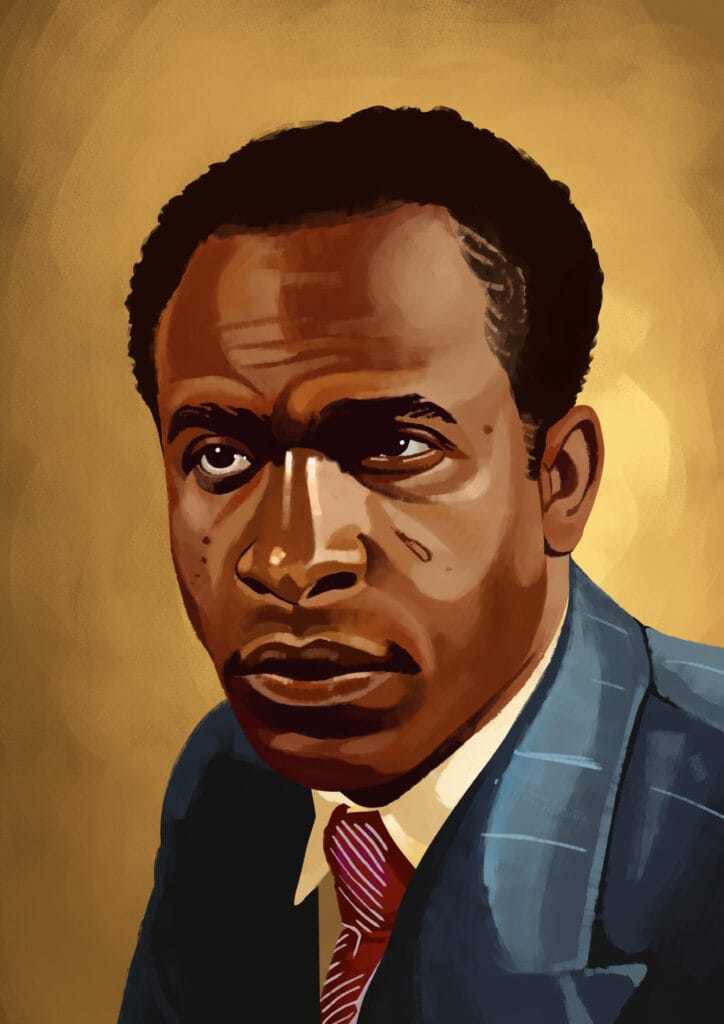
FRANTZ FANON
1925-1961
Frantz Fanon’s life and work have had a lasting impact on anti-colonial movements and the understanding of the psychological effects of colonialism. Fanon was a psychiatrist, intellectual, and revolutionary who became an influential voice in the fight against colonialism and oppression. His works, such as “Black Skin, White Masks” and “Wretched of the Earth,” explored the psychological and social effects of colonialism on colonized peoples. These works, along with his support for the Algerian War of Independence, have influenced anti-colonial movements across the globe.
Fanon’s experiences with racism and colonialism began early in life. Although he grew up on the largely Black island of Martinique, he had not experienced the full force of white racism until he left the island. This exposure led him to write about racial oppression, culminating in his first book, “Black Skin, White Masks.”
In addition to his intellectual pursuits, Fanon played a significant role in the Algerian War of Independence. As a doctor during this time, he treated both Algerian fighters and French colonial forces, witnessing the brutal tactics used by the colonial forces, including mass violence, rape, and torture.
Objectives of Négritude
- Advanced Black Consciousness and pride in African heritage. 18One of the primary objectives of Négritude was to celebrate Black identity and affirm the value of African heritage at a time when colonial societies portrayed Africa as uncivilized and inferior to Europe. Négritude thinkers challenged these ideas by highlighting the richness of African cultures, histories, philosophies, and artistic traditions. Rather than accepting colonial stereotypes, they argued that people of African descent should take pride in their identity and cultural inheritance.
This objective is clearly reflected in the work of Aimé Césaire, one of the founders of the movement. In Notebook of a Return to My Native Land, he celebrated Black identity and challenged colonial attempts to portray African peoples as inferior. Césaire declared, “My negritude is not a stone, its deafness hurled against the clamor of the day,” presenting Black identity as a source of dignity, creativity, and strength rather than shame. Through his poetry, he encouraged people of African descent to embrace their heritage and take pride in African civilization.
The same objective can be seen in the work of Léopold Sédar Senghor, who emphasized the beauty and value of African cultures and traditions. Senghor famously described Négritude as “the sum total of the values of the Black world.” Through poetry, literature, and political thought, Négritude thinkers sought to restore dignity to Black identity and inspire Africans and members of the African diaspora to celebrate their history, culture, and heritage.
- To resist colonial cultural domination and cultural assimilation. 19Négritude rejected the colonial belief that European culture represented the highest standard of civilization and that African peoples could only progress by becoming more European. Colonial education systems in the French Caribbean often reinforced this belief by teaching students to identify with French history, literature, and cultural values while giving little attention to African heritage. In colonies such as Martinique and Guadeloupe, children learned about figures like Joan of Arc and Napoleon but rarely studied African civilizations or the histories of enslaved Africans in the Caribbean. French was promoted as the language of education and social advancement, while Creole languages were often stigmatized as inferior or unsuitable for formal settings. African-derived religious practices, music, and cultural traditions were likewise frequently dismissed as backward or uncivilized. Négritude thinkers challenged these assumptions and argued that no single culture should be regarded as the universal standard by which all others are judged.
This challenge can be seen in the work of Aimé Césaire, whose Discourse on Colonialism attacked the moral and intellectual foundations of European colonialism. Césaire argued that colonial powers often justified domination by claiming cultural superiority while simultaneously engaging in exploitation, violence, and dehumanization. He famously wrote that “no one colonizes innocently,” rejecting the idea that colonialism was a civilizing mission.
Similarly, Léopold Sédar Senghor argued that African cultures possessed their own philosophies, values, and systems of knowledge that were equal in worth to those of Europe. Rather than accepting Europe as the measure of all civilization, Négritude called for a world in which different cultures could be respected on their own terms. In doing so, the movement challenged centuries of colonial thought and helped reshape global conversations about race, culture, and identity.
- Influenced decolonization movements. 20Négritude influenced anti-colonial and decolonization movements by providing colonized peoples with an intellectual framework through which they could challenge colonial domination and reclaim their dignity. Its emphasis on identity, self-worth, and cultural affirmation encouraged many activists to reject the notion that European rule was either natural or necessary.
One of the most influential figures associated with this impact was Frantz Fanon of Martinique. While working in French-ruled Algeria, Fanon witnessed the realities of colonial oppression firsthand and became an active supporter of the Algerian independence movement. In works such as Black Skin, White Masks and The Wretched of the Earth, he examined the psychological effects of colonialism and argued that genuine liberation required both political independence and mental decolonization. His writings became influential among anti-colonial movements in Algeria, Ghana, Kenya, Guinea-Bissau, South Africa, and other parts of Africa struggling against colonial and racial domination.
The influence of Négritude can also be seen in the work of Haitian writer and political activist Jacques Roumain, whose commitment to Black identity, social justice, and national liberation reflected many of the movement’s ideals.
- Influenced Caribbean, African, and Diasporic Literature. 21Négritude had a profound impact on literature throughout Africa, the Caribbean, and the wider African diaspora. The movement encouraged writers and poets to explore themes of race, identity, culture, colonialism, resistance, and liberation from distinctly Black perspectives. At a time when African and Caribbean experiences were often marginalized or distorted in colonial literature, Négritude demonstrated that these experiences were worthy subjects of serious literary expression and intellectual inquiry.
The literary works of Aimé Césaire, Léopold Sédar Senghor, and Léon-Gontran Damas helped establish a tradition of writing that celebrated Black identity while critiquing colonialism and racism. Damas’s poetry collection Pigments (1937), often regarded as one of the foundational texts of the Négritude movement, condemned colonial assimilation, racial discrimination, and the rejection of African identity. In poems such as Hoquet (“Hiccup”), Damas highlighted the pressures placed on colonized peoples to abandon their own cultures and adopt French values and customs. Similarly, Césaire’s Notebook of a Return to My Native Land used poetry to confront colonial oppression while affirming Black identity and African heritage.
The movement’s influence extended to later generations of writers, including Claude McKay, Derek Walcott, Patrick Chamoiseau, and Jean Bernabé. Chamoiseau’s novel Texaco, for example, explores questions of identity, memory, language, and colonialism while celebrating the experiences and culture of ordinary Martinicans. Although later writers often modified, expanded, or challenged aspects of Négritude, they continued to engage with many of the questions about identity, culture, language, race, and colonialism that the movement had brought to the forefront of Caribbean and African literature.
Impact of Négritude
- Cultural Renaissance: Négritude significantly contributed to a cultural renaissance among African and Caribbean communities, leading to a resurgence of interest in African traditions, arts, and literature. It helped to inspire a generation of writers, poets, and artists who explored themes of identity, resistance, and liberation in their work.
- Decolonization Efforts: While primarily a cultural and intellectual movement, Négritude also played a role in the broader decolonization movements across Africa and the Caribbean. It helped to articulate a vision of freedom and autonomy that influenced political movements seeking independence from colonial rule.
- Influence on Later Movements: The ideas and ethos of Négritude influenced later movements that focused on black identity and civil rights, including the Black Power movement in the United States and the Pan-Africanism movement. Its emphasis on black pride and cultural affirmation resonated with many across the African diaspora.
- Academic and Theoretical Contributions: Négritude contributed to the development of postcolonial theory and studies, offering critical perspectives on the impact of colonialism on culture, identity, and society. Its critique of Eurocentric perspectives and valorization of African epistemologies enriched academic discourse.
- Critique and Evolution: While influential, Négritude has also been critiqued for its idealization of Africa, its gender dynamics, and its applicability across diverse African and diasporic contexts. Nevertheless, it opened spaces for the exploration of black identity and the decolonization of thought and culture.
The legacy of Négritude is complex and multifaceted, reflecting its origins in a specific historical and cultural context. Its impact continues to be felt in the ongoing efforts to celebrate black culture, challenge racism, and reassert the value of African and diasporic contributions to global civilization.
RASTAFARIANISM
- Rastafarianism is a religious and social movement that originated in Jamaica in the 1930s, following the coronation of Haile Selassie I as Emperor of Ethiopia in 1930.
- It combines Protestant Christianity, mysticism, and a pan-African political consciousness, and it has had a significant impact on Jamaican culture, music, and identity, as well as a broader influence globally.
- The movement’s development was heavily influenced by the ideas of Marcus Garvey, a Jamaican political leader who advocated for the return of the African diaspora to their ancestral lands.
Objectives of Rastafarianism
- Spiritual and Religious Fulfillment: At its core, Rastafarianism seeks spiritual enlightenment and religious fulfillment through a connection to Haile Selassie I, whom Rastafarians venerate as the reincarnation of Jesus Christ and the living God. This connection is often expressed through Biblical interpretation and spiritual practices.
- African Identity and Heritage: Rastafarianism emphasizes the importance of African heritage and identity among black people. It promotes pride in African culture and history, advocating for a psychological and physical return to Africa, seen as the promised land or Zion.
- Resistance and Liberation: The movement is inherently anti-colonial, challenging the legacies of slavery and racism. It seeks to liberate black people from the oppressive structures of Western society and to reject the Eurocentric worldview.
- Social and Economic Justice: Rastafarians advocate for social and economic justice, opposing materialism and inequality. The movement often emphasizes communal living, cooperation, and the importance of living in harmony with nature.
- Dietary and Lifestyle Practices: Rastafarianism promotes a specific lifestyle that includes the Ital diet (largely vegetarian or vegan), natural living, and the ritualistic use of marijuana, which is considered a sacrament that brings one closer to the divine.
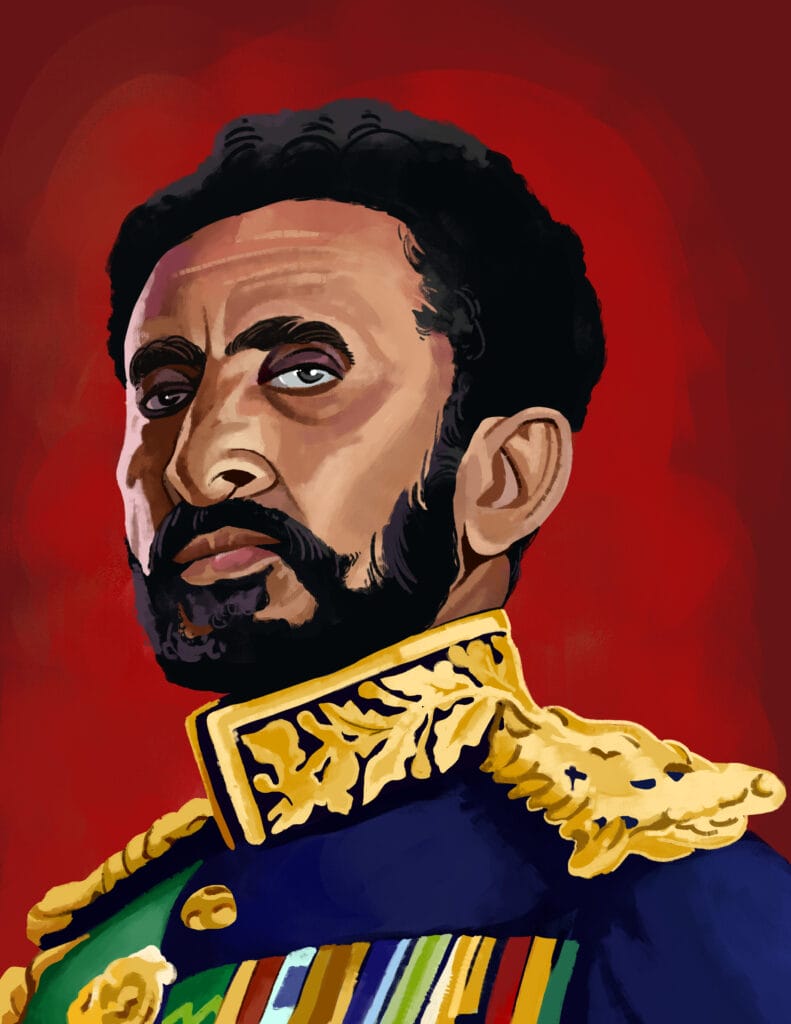
HAILE SELASSIE
1892-1975
Haile Selassie, born on July 23, 1892, near Harer, Ethiopia, and died on August 27, 1975, in Addis Ababa, was the emperor of Ethiopia from 1930 to 1974. He is remembered for his efforts to modernize Ethiopia and steer it into the mainstream of post-World War II African politics. During his reign, Ethiopia joined the League of Nations and the United Nations, and Addis Ababa became the major center for the Organization of African Unity (now African Union).
In addition to his political contributions, Haile Selassie is also a central figure in the Rastafarian movement, which regards him as a divine figure representing African redemption and Pan-Africanism. This belief stems from a speech by Marcus Garvey, a Jamaican-born activist and Pan-Africanist leader, who said, “Look to Africa, when a black king shall be crowned, for the day of deliverance is near.” Garvey’s statement was interpreted by some as referring to Haile Selassie’s coronation, leading to the belief in his divinity within the Rastafarian movement.
Impact of Rastafarianism
- Cultural Influence: Rastafarianism has had a profound impact on music, fashion, language, and lifestyle, most notably through the global spread of reggae music. Artists like Bob Marley have played a pivotal role in popularizing Rastafarian beliefs and aesthetics worldwide.
- Spiritual Movement: It has provided a spiritual and religious framework that resonates with people around the world, particularly those seeking alternative or Afrocentric spiritual paths. Its emphasis on one’s direct relationship with the divine and rejection of institutionalized religious practices is appealing to many.
- Political and Social Activism: The movement has been associated with political and social activism, especially in its critique of inequality, injustice, and oppression. It has inspired and supported movements for social change, both in Jamaica and internationally.
- Racial Pride and Identity: Rastafarianism has contributed significantly to discussions about race, identity, and the African diaspora’s connection to the African continent. It has helped to foster a sense of pride and unity among people of African descent.
- Controversies and Misunderstandings: Despite its positive impacts, Rastafarianism has faced controversy and misunderstanding, particularly regarding its use of marijuana and its unconventional beliefs. However, it has also prompted discussions on religious freedom, cultural expression, and the decriminalization of marijuana.
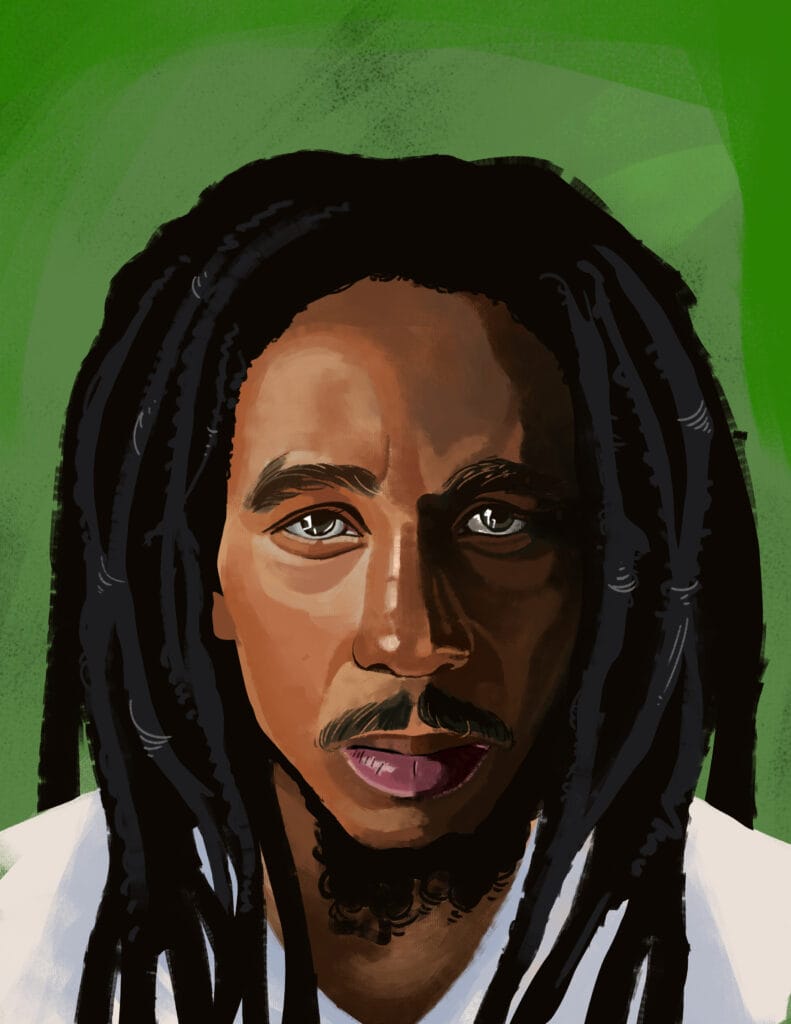
ROBERT NESTA MARLEY
1945 -1981
Robert Nesta Marley, born on February 6, 1945, in Nine Mile, Saint Ann, Jamaica, and died on May 11, 1981, in Miami, Florida, was a Jamaican singer, songwriter, and cultural icon whose music and message helped popularize reggae music across the world. Through his music, Marley addressed themes of resistance, social injustice, African identity, spirituality, unity, and liberation, making him one of the most influential Caribbean figures of the twentieth century.
Marley rose to prominence as the lead singer of The Wailers, alongside musicians such as Peter Tosh and Bunny Wailer. His music blended reggae rhythms with powerful political and spiritual messages rooted in the Rastafarian movement. Songs such as Get Up, Stand Up, Redemption Song, War, and One Love became anthems of resistance, peace, and Black consciousness globally.
A devoted Rastafarian, Marley used his music to promote the principles of Rastafari, including African pride, resistance to oppression, spiritual awareness, and the importance of repatriation and liberation for people of African descent. His music was deeply influenced by Pan-African thought and the teachings of Marcus Garvey. Marley also helped bring international attention to Jamaica, Caribbean culture, and the Rastafarian movement.
Beyond entertainment, Marley became a symbol of unity and political reconciliation in Jamaica. In 1978, during a period of political violence in Jamaica, he famously brought political rivals Michael Manley and Edward Seaga together on stage during the One Love Peace Concert as a symbolic gesture of national unity.
Today, Robert Nesta Marley is remembered not only as a musician but also as a cultural and political figure whose work contributed to the global spread of Caribbean identity, Rastafarian philosophy, and messages of social justice and liberation.
Rastafarianism remains a vibrant and influential movement, reflecting the complex interplay between religion, culture, politics, and identity. Its global impact underscores the interconnectedness of spiritual beliefs, social justice, and the power of cultural expression.